

Rokujuan
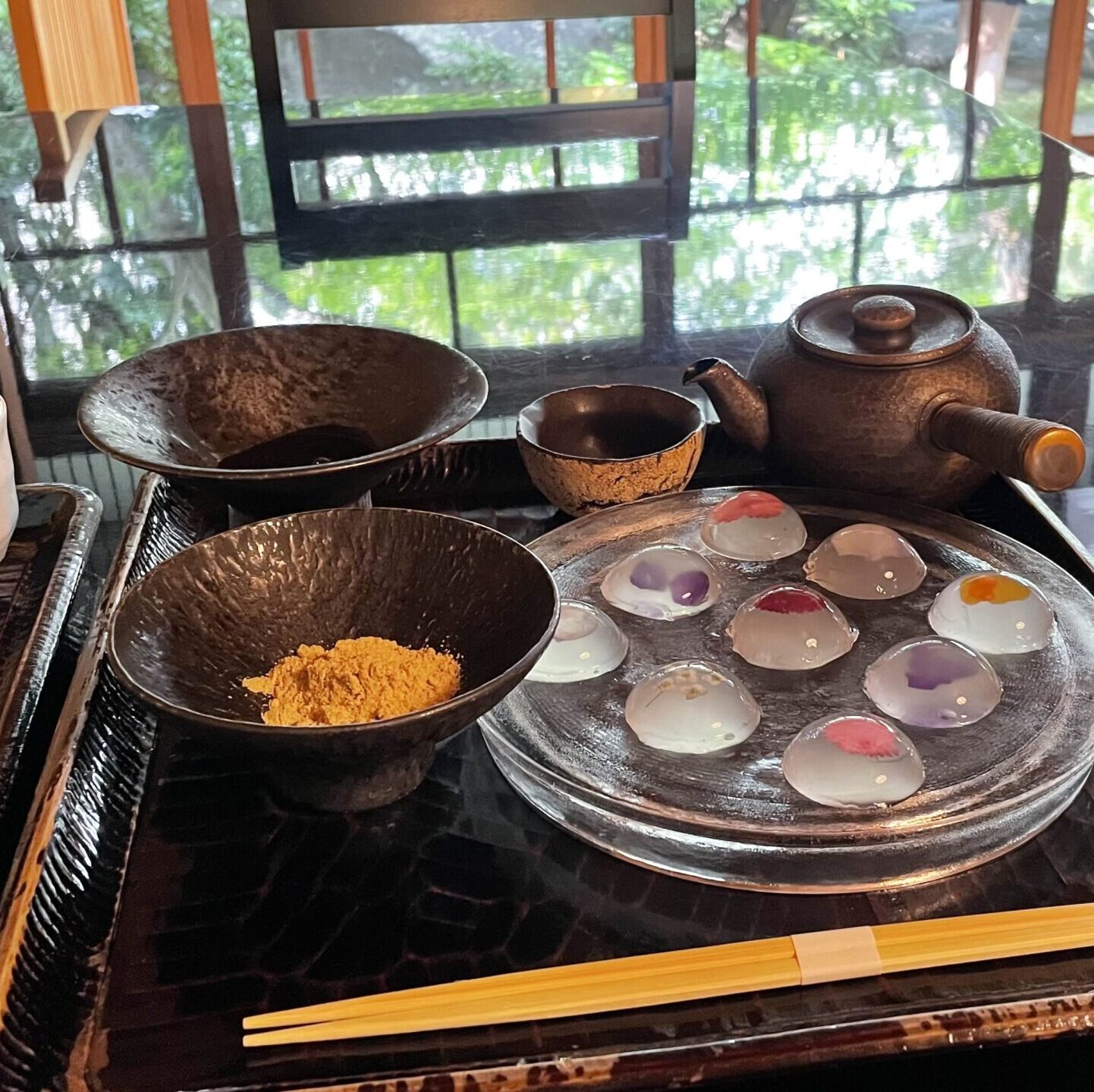
Escape the clamor and step into Meiji-era tranquility.
Experience the ultimate “Hana Warabi” in a pure Japanese-style building that preserves the scent of the Meiji era.
This time, we introduce “Rokujuan,” a warabi mochi specialty shop housed within the Kubo Family Residence, a Registered Tangible Cultural Property that has stood for over 100 years. Located about a 15-minute walk from Kyoto Hotel Kisho-tei Gosho-minami in the city center, the building features garden stones made from Kurama stone—a renowned Kyoto stone now banned from extraction—and “Taisho glass,” a type no longer produced today. Here, you can experience firsthand a slice of Kyoto’s history that cannot be recreated.
About the Kubo Residence (Formerly the Imao Kagenen Residence)
This is the former residence where Imao Kagenen, a Kyoto-born Shijo-school painter active during Japan’s Meiji and Taisho eras, spent his later years. Kagenen created works such as the Dragon in the Clouds painting for Nanzenji Temple and pieces presented during Emperor Taisho’s accession, reflecting his status as a renowned painter of the time.
Keinen had a deep love for the tea ceremony, and visitors can tour his meticulously designed tea room. A distinctive feature of this tea room is a pillar bestowed by Emperor Taisho. It has a large, lump-like protrusion in the center, which is said to be decorated to resemble a monkey.
“Irreproducible” History
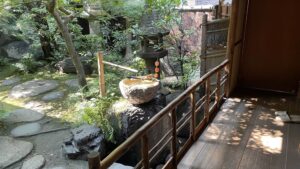
The “Kurama Stone” visible at Rokujuan is a type of granite once quarried from Mount Kurama in Kyoto. Characterized by its reddish-brown hue and gray speckled pattern, it was favored by tea masters for its evocative atmosphere. Due to current regulations prohibiting its general quarrying, it stands as a precious stone that conveys the wabi-sabi aesthetic cherished by tea masters of that era.
Separating the corridor from the garden is “Taisho Glass.” “Taisho Glass” refers to hand-drawn glass, individually crafted by artisans from the Meiji to Taisho periods. Its defining characteristic is its “fluctuation” – the irregular, handcrafted texture resulting from its handmade nature, ensuring no two pieces are alike. Today, flat, high-transparency glass dominates the market, and the manufacturing techniques for “Taisho Glass” remain unestablished, making it a lost technology. Furthermore, the generous use of glass, which was still expensive at the time, hints at the wealth of its creators.
See, Taste, and Savor the Beauty of Japan
Rokujuan’s signature item is “Hana Warabi.” This transparent warabi mochi, encasing edible flowers, captivated attention from the very opening due to its stunning appearance. Accompanying this vibrant, art-like mochi are homemade black sugar syrup and domestically produced kinako (roasted soybean flour). Other offerings include hojicha, matcha, and monaka, all menus befitting the space that evokes wabi-sabi. Seasonal offerings add to the appeal: limited-time shaved ice in summer, and special Hana Warabi featuring cherry blossoms in spring or osmanthus in autumn.
For dinner, a seven-course omakase menu featuring Kyoto vegetables and seasonal ingredients is available (reservation required, advance payment). Enjoy seasonal sashimi, grilled fish, sukiyaki, nigiri sushi, and of course, the signature Hana Warabi. This course uniquely blends tradition and innovation, a hallmark of Rokujuan.
Writer’s Recommended Highlights
Personally, I’d like to draw your attention to the “Taisho Glass.” Its unique shimmering quality stirs a longing for the romance of the Meiji and Taisho eras. Furthermore, at Rokujuan, many pieces of this Taisho Glass remain in place without replacement, allowing you to sense that this mansion has been cherished by many people over the years. As the guide walks you through the mansion, explaining everything carefully, the satisfaction you gain isn’t just from the taste—it’s also an exceptional experience.
Please visit Rokujuan, a place that symbolizes the Karasuma Oike area where our hotel is located—a crossroads of modernity and tradition, weaving together heritage and innovation.
writer
nimo ・ Kyoto native University 4th year student
Rokujuan
101 Nishirokakucho, Rokkaku-dori Shinmachi Nishi-iru, Nakagyo-ku, Kyoto 604-8217
075-746-5927
Cafe Hours
Weekdays, Saturdays, Sundays, Holidays: 08:00 – 20:00 [Last Order 19:00]
Please check the website for reservations.
Dinner Hours
Mon, Thu, Fri, Sat, Sun
5:00 PM – 7:00 PM, 7:30 PM – 9:30 PM (Two-session system)
* No dinner service on Tue & Wed
* Course meals require reservations and advance payment
https://rokujuan.com/

nimo
カフェや建築をよく巡っています☕︎