

Quiet Water Lilies, Found Underground
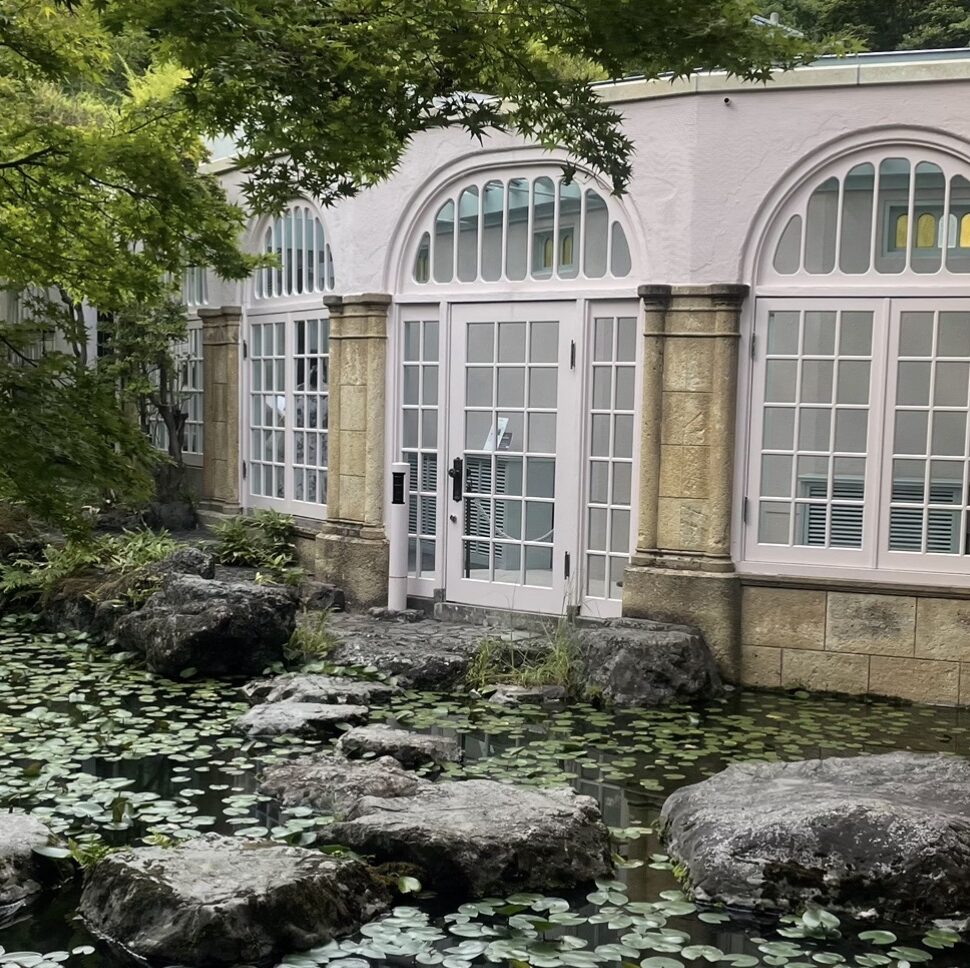
This time, I’d like to introduce the Asahi Group Oyamazaki Villa Museum of Art, located in Otokuni, Oyamazaki Town (Kyoto). The museum is operated with the purpose of preserving and revitalizing Oyamazaki Villa, a residence built from the Taishō to early Shōwa periods. Centered around the collection of a businessman connected to the founding history of the Asahi Group, the museum houses a wide range of works—from Japanese traditional crafts to Western art. Why not take a short trip to this tranquil museum, quietly nestled in the woods and known mostly to those in the know?
A Small Museum on the Hill
The Oyamazaki Villa Museum of Art sits on the southern foothills of Mt. Tennōzan, originally built as a villa for the businessman Shotaro Kaga. Kaga had close ties with the first president of the Asahi Group, and today the museum is operated by the Asahi Group.
From Kyohotel Kishotei Goshominami, you can reach the area by taking the Hankyu Kyoto Line from Karasuma Station to Oyamazaki Station. Since it’s away from the city center, it’s not a place people casually “stop by”—which is exactly why it remains such a calm, hidden gem. From Oyamazaki Station, you can reach the museum either on foot or by using the shuttle bus.
Claude Monet’s Water Lilies
The museum has Claude Monet’s Water Lilies on permanent display. In Japan, there are said to be only five places where you can see Water Lilies in a museum setting, including the National Museum of Western Art, the Pola Museum of Art, the Chichu Art Museum, and the DIC Kawamura Memorial DIC Museum of Art. It has also been announced that the DIC Kawamura Memorial DIC Museum of Art plans to sell a large portion of its collection, including Water Lilies, which may make the opportunity to view the work even rarer.
At Oyamazaki, the museum owns three Water Lilies paintings—displayed in an underground space designed by Tadao Ando, introduced in the next section.
Tadao Ando’s Underground World
Designed by Tadao Ando, the underground gallery is a semi-subterranean exhibition space. Ando himself reportedly called it a “jewel box beneath the earth,” and his signature exposed concrete makes the surrounding nature feel even more vivid.
Follow the passageway connected to the main building and walk down the stairs—and you’re greeted by a quiet underground gallery, where Monet’s Water Lilies await.
With its modern, geometric structure of concrete and glass, the space stands in striking contrast to the main building, which incorporates traditional British styles—almost as if expressing “the past and the future” side by side. The architecture, though made of man-made materials, blends naturally into the terrain by taking advantage of the mountain’s slopes, highlighting the “jewel box” hidden underground.
Writer’s Recommendation
A free shuttle bus runs from the area in front of the nearest stations—JR Yamazaki Station and Hankyu Oyamazaki Station. Of course, taking the bus is a great option, but depending on timing and crowds, it may not always be easy to use.
I walked from JR Yamazaki Station to the museum, and it made the journey feel like part of the experience—something you don’t get in the city, a true “villa-in-the-mountains” kind of approach. The road is mostly uphill, so if slopes aren’t your thing, the shuttle bus is recommended. But if you want to take in every bit of what makes the Oyamazaki Villa Museum special, I highly recommend trying the walk.

nimo
カフェや建築をよく巡っています☕︎