

Feel It, Learn It — The Culture of Japanese Language
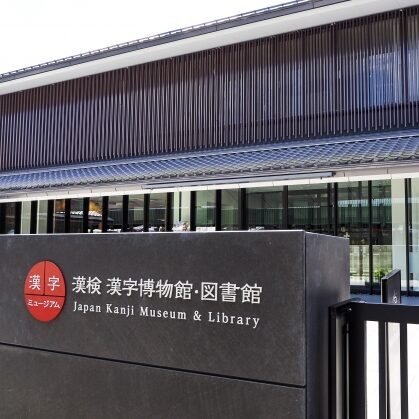
This time, I’d like to introduce the Kanji Museum in Gion.
Its official name is the Kanken Kanji Museum & Library. Rather than “studying” kanji in the traditional sense, this is a place where you can experience kanji as a form of culture. It’s engaging not only for travelers visiting Japan from overseas, but also for those of us living here—thanks to the many hands-on, interactive exhibits that welcome you in.
What Is the Kanji Museum?
As its official name suggests, this is an experience-based museum operated by the Japan Kanji Aptitude Testing Foundation. It opened in 2016 near Yasaka Shrine in Gion, on the site of a former junior high school. In this historically rich learning environment in Kyoto, you can explore Japanese language and culture through fun, memorable activities.
If You Understand Kanji, Can You “See” Kyoto More Clearly?
In Kyoto, you’ll often come across unique place-name expressions you don’t usually see elsewhere.
A well-known example is “agaru” (上ル) and “sagaru” (下ル)—phrases commonly used in addresses around central Kyoto. The kanji 上 (up) is a character that originally represents a concept like “above,” and in Kyoto it typically means heading north, toward the Kyoto Imperial Palace area. In the same way, 下ル (down) generally means heading south.
Because Kyoto developed as a city centered around the Emperor and the Imperial Palace, understanding the meanings behind these kanji expressions can help you feel Kyoto’s culture more deeply.
Interestingly, even north of the Imperial Palace, people still use 上ル simply to mean “north.” One explanation is that the city expanded further north after the expression had already become established.
Since Kyohotel Kishotei Goshominami is located close to the Imperial Palace area, when you take a walk nearby, try looking for addresses that include 上ル and 下ル—it can be a surprisingly fun Kyoto detail to spot.
Look, Touch… and Even Step Inside?!
The Kanji Museum offers a wide range of interactive content:
-
stamping your name using Manyōgana-style seals,
-
completing kanji using your own silhouette on a screen,
-
searching for “dialect kanji” used only in certain regions, and more.
One of the most famous attractions is a giant teacup covered with fish-radical (魚へん) kanji—the kind you might recognize from sushi restaurants. That style of teacup feels especially “Japanese” to many international visitors. And because the museum’s version is big enough for two or three people to stand inside, it’s guaranteed to be a photo highlight.
Whether you’re visiting from overseas, living in Japan, coming with kids, or even on a date—this is a place that fits almost any situation.
For Visitors from Overseas
You might worry, “If I can’t read kanji, will I still enjoy it?”—but no need to. Many displays include both kanji and the alphabet, and there are also exhibits you can enjoy visually even without understanding the meanings. The museum is designed with English-speaking visitors in mind as well.
It’s a great way to experience how kanji—originally introduced from China—developed in uniquely Japanese ways and continues to see everyday use today.
Writer’s Highlight
Every year, Kiyomizu-dera announces the famous “Kanji of the Year”, written in bold calligraphy on a large shikishi board. Have you ever wondered where that board is displayed afterward?
Believe it or not, you can see it at the Kanji Museum. It’s exhibited along with past selections until around February of the following year, so if you’re enjoying Kyoto in winter, it’s a perfect stop to experience the powerful presence of the “Kanji of the Year” up close.

nimo
カフェや建築をよく巡っています☕︎