

Seasonal Colors Floating on a Desk
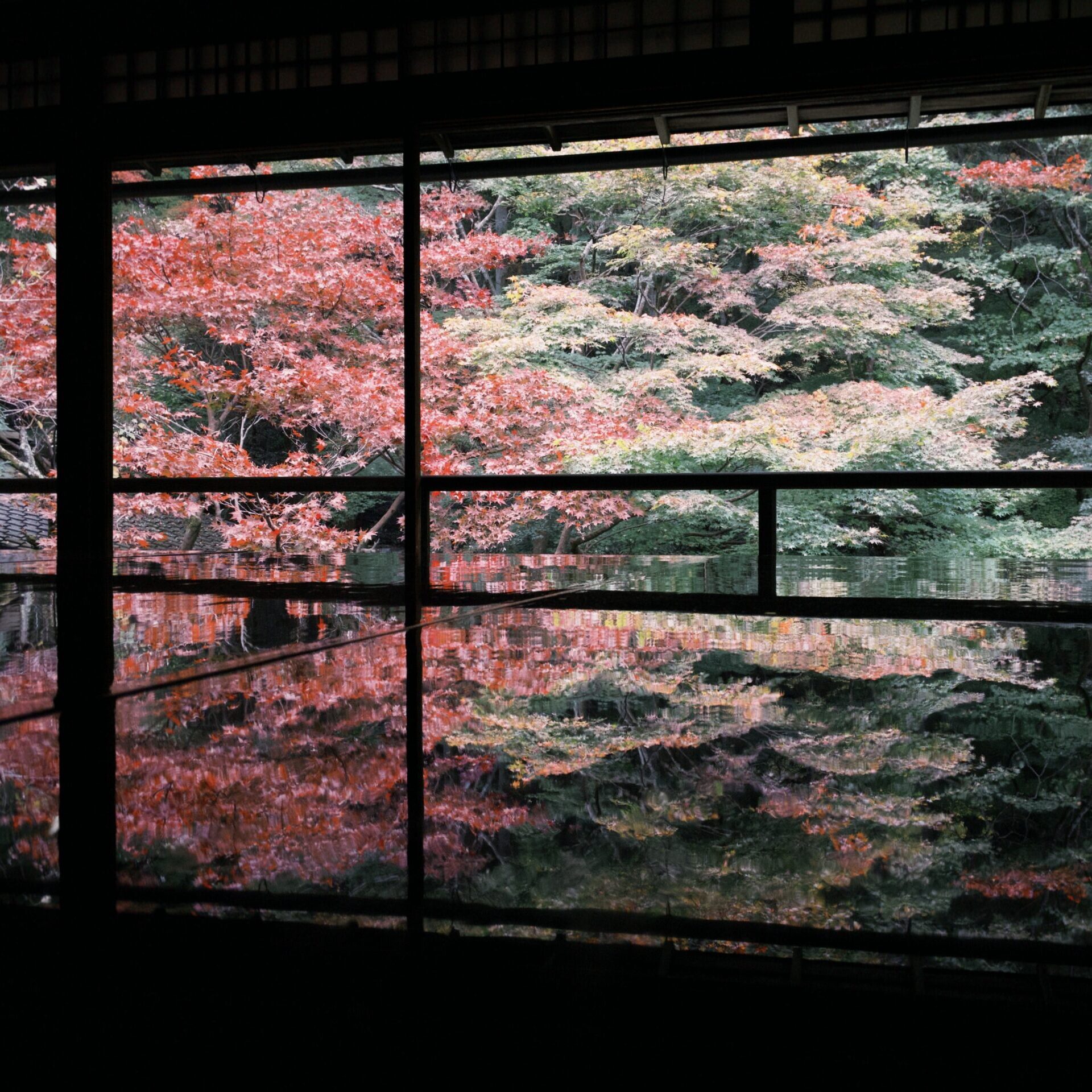
This time, I’d like to introduce Rurikō-in Temple, quietly nestled in Yase, in the northeastern part of Kyoto. Among Kyoto’s many temples, it is especially renowned for the way its beauty changes with the light. Surrounded by rich nature, you can enjoy architecture so refined it feels almost like an art museum.
A Mirror-Like Desk Reflecting the Seasons
When people think of Rurikō-in, the first image that comes to mind is the breathtaking view reflected on a black lacquer desk. Polished like a mirror, the tabletop captures the trees outside in a bold, almost majestic way. Another lovely point is that anyone can take an artistic photo—simply place your camera on the desk and align it so the horizon is level. The autumn colors are stunning, of course, but the fresh green maple leaves in summer are just as unforgettable.
Suddenly, a question: do you remember what was printed on the back of the old 1,000-yen bill (the design with Hideyo Noguchi)? The answer is an upside-down Mt. Fuji—a traditional symbol of good fortune. The mirrored scenery on Rurikō-in’s desk can feel like a modern echo of that auspicious “reverse Fuji.”
And it isn’t only the desk. In the garden, the pond also reflects the surrounding trees, catching and scattering light as the surface ripples. Beyond the famous highlights, try looking for the quiet beauty of reflection created by nature itself.
Windows Like Picture Frames
Of course, Rurikō-in’s charm isn’t limited to reflections. Inside the building are many windows, and each one frames a different scene—like a curated gallery of landscape paintings.
There are large windows opening onto a garden so beautiful it seems to pull you in; smaller windows that reveal only a single stone lantern standing among the trees; and windows that capture leaves swaying in the wind as they overlap with the temple roof. Each has its own character, as if every window is a frame designed to showcase a different “painting.” See if you can find your favorite view.
Visiting in the morning is especially recommended—the soft, gentle light filtering in seems to heighten the beauty even further.
Maple Light Dyeing the Tatami
I visited Rurikō-in just as the autumn leaves were beginning to turn. The interior was slightly dim, lit by sunlight streaming through countless windows—and it was all beautiful. But what stayed with me most was the tatami softly stained red with light.
On the opposite side of the large window overlooking the green main garden, there was a small inner courtyard where the maples had just started to redden. Sunlight passed through those crimson leaves, turning into something like a red lamp and casting a warm glow onto the tatami.
The contrast was striking: the lush, deep green moss across the way, and the simple tatami floor quietly tinted with red. It’s easy to be dazzled by the grand garden—but discovering this kind of small, hidden beauty is what can make the visit truly unforgettable. Since the light changes depending on the time of day, I recommend capturing your favorite moment on camera.
Savoring Japan Through Characters and Light
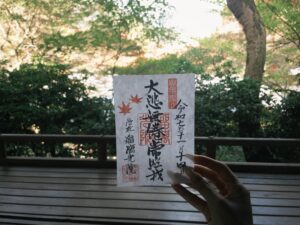
At Rurikō-in, you can receive a goshuin (temple seal). It’s a self-fill style—you write the date yourself, and place your payment as an “offering” into a box beside it. In November, a limited-time maple motif is added to the goshuin, so if you’re hoping for a seasonal design, visiting in November is especially recommended. Even a single goshuin can carry the feeling of the seasons.
You’ll also receive a small bag upon entry containing shakyō (sutra-copying) paper and a pen. After viewing the second-floor study hall, sitting at a desk to try shakyō can be a wonderful experience. As you focus, time seems to pass in an instant. Through the act of writing kanji, you may find yourself touching a quiet, distinctly Japanese sense of calm—and a gentler flow of time.
Writer’s Recommendation
You can reach Rurikō-in by Kyoto bus, but I especially recommend taking the Eizan Railway (Eiden). It connects Demachiyanagi Station to Yase-Hieizan-guchi Station, and the scenery from the train window is famous for its beauty. During the autumn foliage season, some people ride the line simply for the views.
Also, during peak season, Rurikō-in often requires time-designated tickets, so taking the train can feel more reliable and stress-free than the bus when it comes to planning your schedule.

nimo
カフェや建築をよく巡っています☕︎